Author: Mirin Fader

Mirin Fader is a sports writer living in Los Angeles. She is a senior staff writer for The Ringer, and is the author of the New York Times best-selling book, Giannis: The Improbable Rise of an NBA MVP. She can be reached on Twitter @MirinFader.
Read More

Book Richardson is out of prison but he doesn’t feel free

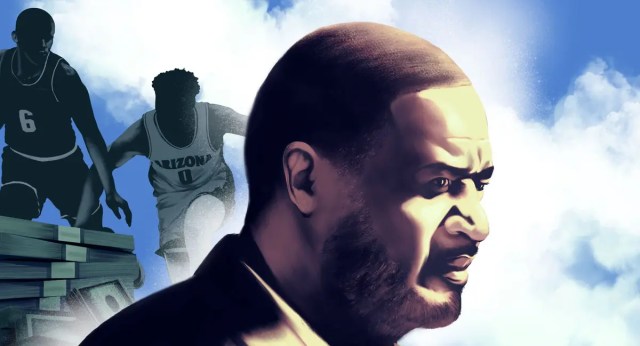
When Richardson is in this mode, black dry-erase marker in hand, jotting down notes on the board, he feels most whole, most alive. Coaching, hooping, losing himself in the rhythm of a play. “He’s so passionate about what he does,” says 14-year-old Elijah Novotny, one of Richardson’s players. “I can just feel his energy.” It’s in these moments, Richardson says, that he forgets he’s coaching middle schoolers. It’s almost as if he’s back on the Division I court, back at the University of Arizona, where he served as an assistant coach from 2009 to 2017. He was known in college basketball circles as one of the top recruiters in the country, and he regularly helped his teams land top-10 recruiting classes. While in Tucson as part of Sean Miller’s staff, Richardson helped continue the Wildcats’ winning tradition; he was part of five Sweet 16s, three Elite Eights, four Pac-12 regular-season championships, and a pair of Pac-12 tournament titles. Sometimes, when he’s alone on the Gauchos’ court, long after his players have gone home, Richardson turns off the lights and imagines himself in another time, another place. Before the FBI investigation. Before he lost his job, his career, and his sense of identity. For a moment, his shame dissipates, and he allows himself to dream. “I find myself back on the college bench,” he says. “I find myself back in the college locker room. I find myself trying to get to a Final Four.”
Read More

THE INTERNAL RECKONING OF JAVIER “CHICHARITO” HERNANDEZ

Javier “Chicharito” Hernández glances at the ink that lines his arms. He points to a tattoo of a yin and yang symbol. Then one of two elephants, a larger one and a smaller one, drawn across his right forearm. The elephants represent what he refers to as his childish side and his mature side. He calls these competing parts of him his “dualities.” And there are others. His ego versus his essence. His light versus his shadow. Chicharito versus Javi—the name he’s known by all over the world, and the one used by family and loved ones. “I have two sides,” he says. “And it’s not just because I’m a Gemini. I think we all have it.”

Read More

ROSALIE fish wants to be the face of change

Before every race, Rosalie Fish stares at her reflection in the mirror. She pauses a few minutes and thinks of Indigenous women. Women who have gone missing, who have been murdered. Those whose names she knows, those whose names she’ll never know. Aunts, cousins, neighbors, classmates. Women who had families, who had ambitions. Who had children, friends, dreams, desires. She paints a giant red hand across her mouth, stretching across her cheeks. Red is the color that spirits, that ancestors, can see, according to some Native traditions. The hand over her mouth is meant to represent and honor the Indigenous women who have been silenced through violence—sexual violence, physical violence, psychological violence—an epidemic that receives little national attention. “I had always known I was a target,” Fish says.

Read More

INSIDE THE PAIN CAVE

When she feels as if she is running on shards of glass, when her legs feel like they are about to split open, when she thinks she can’t possibly run one more mile, Courtney Dauwalter starts visualizing the pain cave. It’s a place she constructs in her mind with elaborate detail. She conjures every crevice of the cave’s architecture: a large space with different tunnels inside. The cavernous paths in her mind can be wide or narrow, depending on the length and duration of the race. But with Courtney, they’re usually impossibly long. Dauwalter, 37, is considered the world’s best female ultramarathon runner. She might just be the greatest ultrarunner of all time, period. She races astonishing distances of 100- and 200-plus miles, even once attempting a 486-mile course. She is often on her feet for a mind-bending 24 or 48 straight hours, in the harshest environments imaginable, from steep terrain and high elevation to extreme weather.
Each race, she intends to go into the pain cave. She almost craves it. She warns herself, standing at the start line right before the gun goes off, that she is about to embark on another uncomfortable journey to the cave. “It’s not always going to feel great,” she tells herself. “But that’s going to make us better. We’re going to get better from visiting it.”

Read More

AUSTIN REAVES’S PERSISTENCE PAYS OFF WITH UNEXPECTED LAKERS ROLE

Austin Reaves took his customary seat in the back row of the Lakers’ meeting room while the team reviewed film from the previous night’s game against Oklahoma City. Lakers coach Frank Vogel paused the tape on a clip of Reaves defending Thunder guard Shai Gilgeous-Alexander, who had the ball on the right wing. “Should we double? What do y’all think?” Vogel asked the group. Essentially, Vogel was asking if Reaves would need help—or if he would be able to handle the assignment by himself. LeBron James was the first to speak up, according to Reaves, asserting that he could take SGA by himself. A chorus of agreement poured in, with multiple players saying: “No, he can guard him.” Then Trevor Ariza chimed in: “This motherfucker can guard him,” Reaves remembers Ariza saying. “We don’t need to [double].”

Read More

The Future of U.S. Women’s Soccer Is Here

Alex Morgan waited her turn. Before she morphed into one of the greatest footballers of all time, she was just a 22-year-old hopeful making her World Cup debut for the U.S. women’s national team. It was 2011, and Team USA was playing in its first match at the World Cup. Excitement hummed inside the team’s youngest player, as she tried to navigate the delicate balance between fitting in and standing out.

Read More

THE FUTURE IS SCOOT

Scoot Henderson dribbles an imaginary basketball between his legs. He pump-fakes, one, two, three times, as if he were in a real game, and pulls up for a jumper at the elbow. But he isn’t on the hardwood. He’s standing in the middle of an empty parking lot outside of a high school in Henderson, Nevada. It’s cold and windy on this November morning. He and his G League Ignite teammates are waiting outside the gym for another team to finish practicing.

Read More

THE BURDEN OF BEING BIJAN ROBINSON

Bijan Robinson almost always has a football in his hands. It’s his comfort, his connection to home. The moment practice ends at the Atlanta Falcons facility, he rushes to the on-site barber, squeezing in a quick haircut. He smiles, on this December afternoon, recalling a story passed down by his family: He carried a football with him to his first haircut. Unable to sit still, 1-year-old Bijan kept finding targets in the barbershop. “I was throwing the football with everybody I saw,” he says. Robinson even regularly sneaked his football into church as a young boy, deviating from his duties as a drummer for the congregation. “Bijan! Put down that football!” his grandparents Cleo and Gerri Robinson would say.

Read More

BREANNA STEWART FINDS NEW PERSPECTIVE ATOP THE WORLD

Dozens of young girl hoopers logged on to their computers, hoping to virtually meet their idol. Usually they’d be lining a tunnel in Seattle, watching Breanna Stewart as she runs onto the court. No matter. The girls were just excited to see her on their screens. Watch her. Maybe even talk to her. The girls were wearing muscle tanks, shorts. They looked ready to compete. They looked like her. Stewart started setting up video calls with young girls’ teams across the country last spring, during the height of quarantine, hoping to inspire the next generation of players while gyms were still closed. She wanted to tell them how to challenge themselves (she has to make 100 3s before she leaves the gym, 10 in a row at each spot). And she wanted to tell them about the voice in her head. The one that pushes her, the one that chases perfection. I have to be the best. I have to be the best.

Read More

“YOU CAN’T TAKE A DAY OFF”

A couple more drives, a couple more minutes. Rewind, fast-forward. Rewind, fast-forward. There are hours of game film to dissect. It’s late at night in Tuscaloosa, Alabama, and the young man who shoulders the city’s dreams is not asleep. He’s mesmerized by the movements on the screen. Bryce Young needs to catch one last glimpse of film before he shuts his eyes. Never mind that no one has asked him to. Or that he has already watched plenty throughout the day, with his teammates, with his coaches; he wants more. He is attentive to detail when he watches film, same as when he plays. On the field, Young approaches the line of scrimmage almost knowing what’s about to happen, based on his initial look. He can see the play before the play—his mind moves quicker than his feet.